CBD vs THC: What's the Difference Between These Two Cannabinoids?
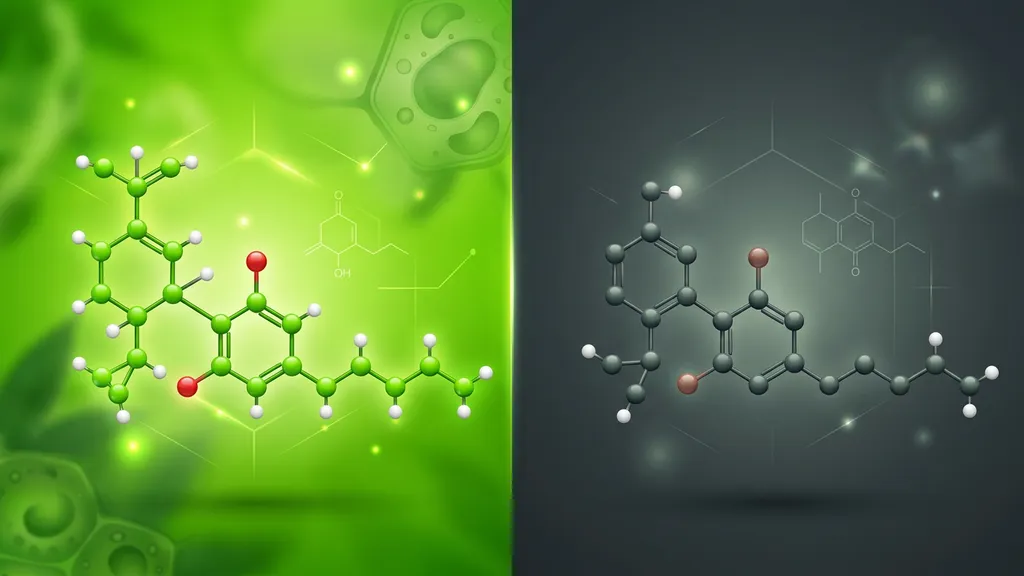
CBD vs THC is one of the most searched questions by anyone exploring the world of cannabis. Both CBD and THC are cannabinoids found in the cannabis plant, but the differences between them are significant: from the effects on the body to legality, from chemical structure to how they interact with the endocannabinoid system.
In this guide, we analyse all the similarities and differences between CBD and THC, explaining how they work in the human body, what the properties of each are, and why CBD products are widely available while THC sits within a different regulatory framework in many countries.
What Are CBD and THC?
THC (tetrahydrocannabinol) and CBD (cannabidiol) are the two primary cannabinoids derived from the cannabis plant. The plant contains over 100 different cannabinoids, but these two are the most abundant and the most extensively studied.
What Is THC?
THC is the active compound responsible for the psychoactive effects of cannabis and marijuana. It is what produces the so-called "high": the alteration of perception, mood and consciousness associated with cannabis use. The full chemical name is delta-9-tetrahydrocannabinol, the primary psychoactive cannabinoid found in the plant.
When consumed, THC binds directly to CB1 receptors in the brain, activating reward systems and producing psychoactive effects. This is why marijuana with high THC content can cause significant changes in perception and cognition.
What Is CBD?
CBD is the second most abundant cannabinoid in the cannabis plant. Unlike THC, it does not produce psychoactive effects: it does not alter perception, does not cause a "high" and does not create dependency. CBD has a favourable safety profile, confirmed by the WHO in its 2018 Critical Review, and it has properties that have generated steady interest in research and wellness contexts.
CBD is also found in hemp plants, which are cannabis plants bred for low THC content (in the EU under the CAP cap of 0.3% since 2023). Most CBD products on the market are derived from industrial hemp.
CBD vs THC: Chemical Structure and Differences Between Them
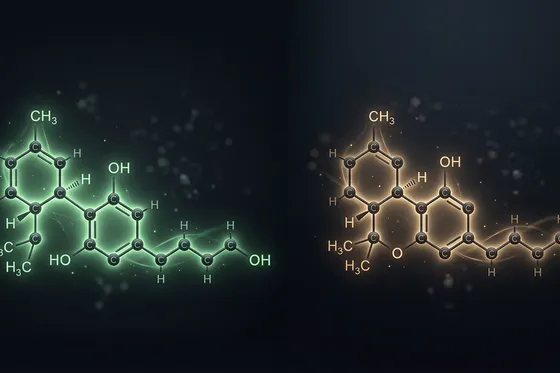
The similarities and differences between CBD and THC start with their chemical structure. Both CBD and THC have the same molecular composition: 21 carbon atoms, 30 hydrogen atoms and 2 oxygen atoms. The structure is nearly identical, but the arrangement of a single chemical bond changes everything.
The Molecular Structure of CBD and THC
The structure of both CBD and THC is so similar that they both interact with the endocannabinoid system in the body. However, the small difference in three-dimensional structure produces completely different effects:
- THC binds directly to CB1 receptors in the brain: this is the reason for its psychoactive effects and the "high"
- CBD does not bind directly to CB1 and CB2 receptors in the same way. CBD acts indirectly, modulating the functions of the endocannabinoid system without altering consciousness
This structural difference and the distinct way each cannabinoid interacts with receptors is the fundamental reason why THC produces psychoactive effects and CBD does not. Both CBD and THC are cannabinoids from the cannabis plant, yet they could not be more different in their effects on the human body.
The legal paradox. Here is one of the strangest ironies in modern regulation: CBD and THC come from the same plant, they share the exact same chemical formula, and they even look almost identical under a microscope. Yet in most countries, one is freely sold in shops while the other remains a controlled substance. CBD and THC share the exact same molecular formula (C₂₁H₃₀O₂) but differ in molecular structure: THC has a closed pyran ring (tricyclic structure), while CBD has an open ring with a free hydroxyl group (bicyclic structure). This single topological difference, not a difference in atomic composition, is what creates their dramatically different effects on cannabinoid receptors -- and the legal distinction that follows. Few other examples in nature illustrate so perfectly how a tiny structural change can create such a dramatic difference in both biology and law.
How CBD and THC Interact with the Endocannabinoid System
Both CBD and THC interact with the endocannabinoid system (ECS), a complex network of receptors and endogenous compounds found throughout the body. The endocannabinoid system regulates many fundamental functions: mood, pain, sleep, appetite, memory and immune response.
CB1 Receptors and the Central Nervous System
CB1 receptors are concentrated in the central nervous system, particularly in the brain. THC binds primarily to CB1 receptors: this interaction is the direct cause of its psychoactive effects. When THC binds to CB1 receptors in the brain, it activates reward systems and alters cognitive functions, producing the "high."
CBD, on the other hand, does not bind directly to CB1 receptors. CBD can actually modulate CB1 receptor activity, attenuating some effects of THC. This is why some products combine both CBD and THC: CBD can balance the psychoactive effects of THC.
CB1 and CB2 Receptors and the Immune System
CB2 receptors are distributed mainly in the immune system and peripheral tissues. Both CBD and THC interact with CB2 receptors, but in different ways:
- THC can activate CB2 receptors, modulating immune response and inflammation
- CBD has low direct binding affinity for both CB1 and CB2 receptors. Its main mechanism of action is multi-target and allosteric: it acts as a negative allosteric modulator of CB1, positive allosteric modulator of the 5-HT1A serotonin receptor, agonist of the TRPV1 channel, and antagonist of GPR55. This pharmacological complexity explains CBD's diverse effects without psychoactive activity
The Endocannabinoid System and Body Balance
The endocannabinoid system plays a fundamental role in maintaining homeostasis: the internal balance of the body. Both cannabinoids interact with the endocannabinoid system, but in different ways. THC can disrupt this balance (producing the "high"), while CBD appears to support the endocannabinoid system in its regulatory work without altering cognitive functions.
The relationship between THC and CBD in the endocannabinoid system is complex. The ECS responds differently to various concentrations of these two cannabinoids, and the ratio of CBD and THC in a product can significantly influence the overall effects.
Side Effects and Psychoactive Effects: The Key Difference Between CBD vs THC
The most important difference between CBD and THC concerns psychoactive effects. This is the point that clearly separates the two cannabinoids.
Effects of THC
THC produces psychoactive effects that include:
- High: a sensation of euphoria and altered perception
- Cognitive alteration: THC can affect memory, concentration and reaction time
- Increased appetite: the so-called "munchies"
- Altered time perception: THC can make time feel slower
- Anxiety and paranoia: at high doses or in predisposed people, THC can cause anxiety and discomfort
THC is also used in medical cannabis: prescribed by doctors for the treatment of chronic pain, nausea and vomiting from chemotherapy, and other conditions. However, its side effects and psychoactive properties limit its everyday use and make it a controlled substance in many states.
Effects of CBD
CBD does not produce psychoactive effects. While CBD interacts with the endocannabinoid system, it does so without altering consciousness. The effects of CBD include:
- Relaxation: CBD has calming properties, it relaxes without causing impairment
- Mood support: CBD's interaction with the stress response has been examined in studies such as Bergamaschi et al. (2011, Neuropsychopharmacology) on social anxiety
- Sleep quality: a 2019 case series by Shannon et al. in The Permanente Journal observed sleep score improvements in 66.7% of 72 adults within the first month
- Physical wellbeing: CBD continues to be the subject of pharmacological research
- No "high": CBD does not alter perception or cognitive functions
CBD can be used during the day, at work, while driving, without affecting mental abilities. This is a fundamental difference with THC and one of the main reasons people choose CBD products.
CBD and THC: Side Effects Compared
Here is a comprehensive comparison of the similarities and differences between the two cannabinoids:
| CBD (Cannabidiol) | THC (Tetrahydrocannabinol) | |
|---|---|---|
| Psychoactive effects | No | Yes, produces the "high" |
| Side effects | Rare and mild | Anxiety, paranoia, cognitive alteration |
| Chemical structure | C21H30O2 | C21H30O2 (same composition) |
| Primary receptors | Multi-target allosteric (5-HT1A, TRPV1, GPR55, CB1 modulation) | CB1 in the brain |
| Dependency | No (confirmed by WHO) | Possible with prolonged use |
| Safety profile | Excellent | Risk of side effects |
| Legality | Legal in most countries | Controlled substance in many states |
| Medical use | EMA-authorised Epidiolex for rare epilepsies; ongoing research | Medical cannabis (prescription) |
| Drug test | Generally does not trigger | Will trigger a drug test |
Similarities Between CBD and THC
Despite the differences, both CBD and THC share important similarities:
- Both are derived from the cannabis plant
- Both interact with the endocannabinoid system in the body
- Both have potential therapeutic properties studied by research
- Both are found in various varieties of hemp and marijuana
- The ratio of CBD and THC in a product determines the overall experience
A comparison worth considering: CBD and THC as two sides of the same coin. If THC is the accelerator, CBD is the brake. Both cannabinoids act on the same system in the body (the endocannabinoid system) but they push it in opposite directions. THC activates CB1 receptors directly, ramping up neural activity in ways that alter mood, perception and cognition. CBD, by contrast, modulates the system indirectly and can even dampen the effects of THC when both are present. This is why balanced CBD-to-THC ratios in products tend to produce milder experiences than THC alone. Think of them as yin and yang within the cannabis plant: opposite forces that together represent the full spectrum of what the plant can offer.
CBD vs THC and Drug Test Concerns
One important practical consideration in the CBD vs THC debate involves drug testing. THC is the compound that drug tests look for, and it can remain detectable in the body for days or weeks after use.
CBD products from industrial hemp with low THC content (within national thresholds, e.g. EU CAP cap of 0.3%) are generally considered safe in terms of drug testing. However, if you use full-spectrum CBD products regularly, trace amounts of THC could theoretically accumulate. If you are concerned about a drug test, consider using CBD isolate products or broad-spectrum CBD products that contain no THC at all.
It is also important to buy CBD products from reputable sources that provide third-party lab reports confirming THC levels. This is the best way to ensure that your CBD product will not cause issues on a drug test.
Research on CBD and THC
Both CBD and THC are subjects of research for their potential therapeutic properties. Studies on CBD and THC are growing, and results are generating scientific interest for various conditions.
Research on CBD
Research on cannabidiol covers properties in several areas:
- Stress-related research: Bergamaschi et al. (2011, Neuropsychopharmacology) examined CBD's effect on stress response in a small RCT on social anxiety
- Sleep research: Shannon et al. (2019, The Permanente Journal) observed sleep score improvements in 66.7% of 72 adults within the first month
- Physical wellbeing: pharmacological work continues on CBD's multi-target activity
- Epilepsy: Epidiolex (a CBD-based medicine) received EMA authorisation in 2019 for rare forms of paediatric epilepsy such as Dravet and Lennox-Gastaut syndromes
- Neuroprotection: preclinical work has examined CBD's potential neuroprotective profile
- Endocannabinoid system: CBD interacts with multiple receptors beyond CB1 and CB2 (5-HT1A, TRPV1, GPR55)
Studied Benefits of THC
THC has recognised therapeutic effects in medical contexts:
- Chronic pain: THC is studied in the context of pain, especially neuropathic pain
- Nausea and vomiting: THC is used for patients undergoing chemotherapy to reduce nausea
- Appetite stimulation: useful for patients with conditions that cause weight loss
- Muscle spasticity: THC is studied in the context of multiple sclerosis and other conditions
However, THC carries risks that CBD does not: psychoactive effects, possible dependency with prolonged use, cognitive side effects. This is why medical cannabis requires prescription and medical supervision.
Safety Profile: CBD vs THC
The safety profile of CBD is significantly better than that of THC:
- CBD has an excellent safety profile: the WHO confirms it presents no risk of abuse
- THC can cause side effects such as anxiety, paranoia, cognitive alteration, increased heart rate
- CBD does not create dependency. THC can create dependency with prolonged use
- Cannabis use with high THC content is associated with mental health risks, especially in young people
Regulatory Status of CBD and THC
The differences between CBD and THC are also reflected in their regulatory status, which varies significantly from one jurisdiction to another.
CBD: Diverse Frameworks Across Countries
CBD derived from industrial hemp is widely available across European countries. The Court of Justice of the EU (Kanavape, 2020) ruled that CBD is not a narcotic and that member states cannot in principle ban its sale if legally produced in another member state. Specific national rules vary and continue to evolve.
THC: Controlled in Many Countries
THC is a controlled substance in many countries. Cannabis with high THC content is subject to narcotics legislation in most of Europe. Medical cannabis containing THC is permitted with medical prescription in some jurisdictions for patients with specific conditions.
CBD Products: The Key Is Low THC Content
CBD products from the industrial hemp supply chain in Europe typically reference the national thresholds (e.g. EU CAP cap of 0.3% THC since 2023). This low THC content is generally insufficient to produce relevant psychoactive effects. You can purchase CBD products without a prescription from physical shops and online retailers.
Where to Buy Quality CBD Products
If you are looking for high quality CBD products with low THC content from the industrial hemp supply chain:
- JustBob: CBD flowers, CBD hash, oils, extracts. Discount code PROMO15 for 15% off everything. Visit JustBob
- Terpy: CBD e-liquids. Discount code PROMO10 for 10% off. Visit Terpy
- SensorySeeds: cannabis seeds for collection. Discount code PROMO10 for 10% off. Visit SensorySeeds
Frequently Asked Questions: CBD vs THC
What's the difference between CBD and THC?
The main difference is in the psychoactive effects: THC produces the "high" and alters perception, while CBD has no psychoactive effects and does not alter consciousness. Both are cannabinoids from the cannabis plant, but THC binds directly to CB1 receptors in the brain, producing psychoactive effects, while CBD does not.
Can CBD and THC be used together?
Yes. In some legal cannabis products, CBD and THC are present together (with THC within legal limits). CBD can modulate the effects of THC, reducing side effects. In medicinal cannabis, the ratio of CBD and THC is calibrated by the doctor for treating specific conditions.
Can CBD counteract the effects of THC?
CBD can attenuate some effects of THC, particularly anxiety and paranoia. CBD acts on CB1 receptors indirectly, modulating the intensity with which THC binds to these receptors. This is why products with a balanced CBD and THC ratio tend to have less intense effects than products containing only THC.
Do CBD and THC cause dependency?
CBD does not create dependency, confirmed by the WHO with an excellent safety profile. THC can create dependency with prolonged and frequent use, although the risk is considered lower than with other substances.
Will CBD show up on a drug test?
Pure CBD should not trigger a drug test. However, some CBD products contain trace amounts of THC that could accumulate with regular use. If you are worried about a drug test, choose CBD isolate products that contain no THC.
Further Reading