CBD Sleep: What the Research Says
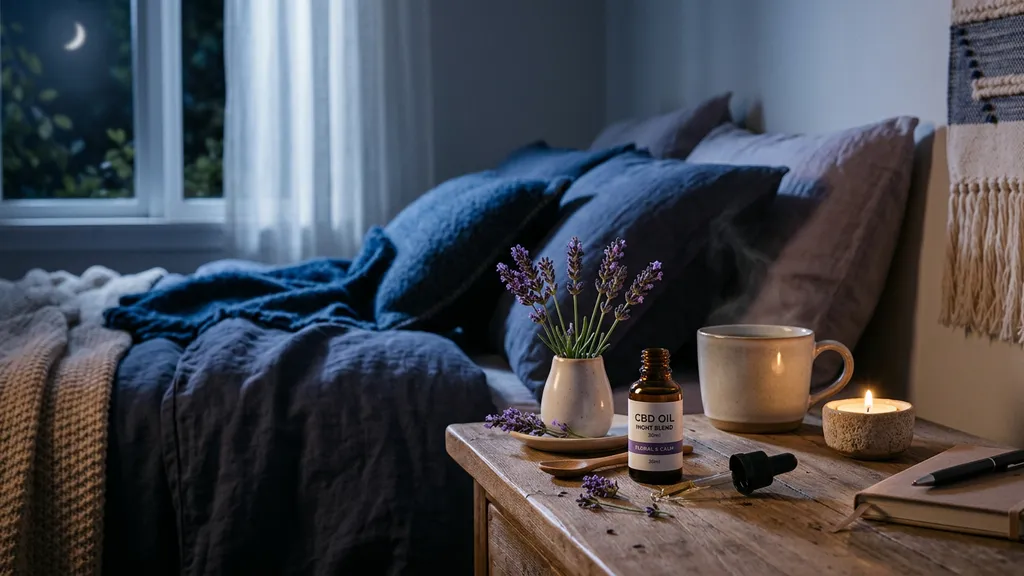
The connection between CBD and sleep is one of the most studied topics in cannabinoid research. Investigators have examined how CBD interacts with the endocannabinoid system and the mechanisms related to night-time rest.
In this guide, we look at what the research literature has covered so far, the role of the endocannabinoid system and the relationship between CBD and melatonin from a scientific perspective.
How CBD Interacts with the Endocannabinoid System
CBD (cannabidiol) is a compound found in the cannabis plant that interacts with the body's endocannabinoid system. This system plays a role in regulating many functions, including sleep, mood, pain and stress. Unlike THC (tetrahydrocannabinol), CBD is not psychoactive: it does not produce a high or any mind-altering effects.
CBD and the Endocannabinoid System
The endocannabinoid system contains receptors (CB1 and CB2) distributed throughout the body, including the brain and nervous system. CBD has low direct binding affinity at CB1 and CB2 and acts mainly through allosteric modulation of multiple targets, which has been examined in connection with sleep through several pathways:
- Stress response: stress is one of the most common factors that affect the ability to wind down at night. Bergamaschi et al. (2011, Neuropsychopharmacology) examined CBD's effect on the stress response in a small RCT on social anxiety patients.
- Relaxation: CBD's positive allosteric modulation of the 5-HT1A serotonin receptor has been characterised pharmacologically.
- Sleep-wake cycle: anandamide, a key endocannabinoid, follows a biphasic rhythm with a nocturnal peak in early sleep and a second peak in the afternoon.
What the Research Literature Reports on CBD and Sleep
The clinical literature on CBD and sleep is still developing, but the results so far are notable:
- A 2019 retrospective case series published in The Permanente Journal (Shannon et al., n=72 adults) observed that 66.7% of participants showed improved sleep scores (PSQI) within the first month, with anxiety scores reduced in 79.2% of patients (HAM-A). As an open-label observational study, results should be interpreted with caution and randomised controlled trials are needed for clinical guidelines.
- A handful of small trials have looked at CBD's interaction with REM sleep, an area still under active investigation.
- Further work is needed to confirm preliminary observations, particularly with placebo-controlled designs and standardised dosing.
More work is needed to fully characterise CBD's effects on sleep, but the early findings have been enough for many people to integrate CBD into their bedtime routine.
One helpful way to approach this topic is to think of sleep as an ecosystem rather than a single switch. It involves the nervous system, hormones like melatonin, the circadian rhythm driven by light exposure, and countless daily habits -- diet, screen time, room temperature. When research explores CBD and rest quality, it looks at just one piece of this ecosystem. That's why scientists frame their findings carefully, and why CBD is always discussed as part of a broader picture rather than a single-lever solution.
The Best CBD Products for Sleep
There are several forms of CBD you can choose to explore for sleep support. The best product for you depends on your preferences, how quickly you want to feel the effects, and your experience with CBD.
CBD Oil for Sleep
CBD oil is the most popular choice among people interested in CBD for sleep.
CBD oil is available in various concentrations, from 5% to 30%, so you can choose the product best suited to your needs. For sleep, many users prefer a full spectrum CBD oil, which contains other cannabinoids like CBN (cannabinol), a compound being studied for its properties. The combination of CBD and other cannabinoids in a full spectrum oil may produce an enhanced effect through the entourage effect.
CBD Oil in Different Concentrations
CBD oil is available in a range of concentrations, from 5% to 30%, allowing you to choose the product best suited to your needs. Higher concentrations may be more practical for experienced users, while lower concentrations are ideal for beginners.
CBD Flowers (Vaporisation)
Vaporising CBD flowers provides the fastest onset of effects: within minutes. For those who want immediate relaxation before bed, this can be an interesting option. You can find premium CBD flowers with the JustBob discount code for 15% off.
A fascinating scientific finding: researchers have discovered that the endocannabinoid system does not operate on a flat schedule -- it follows its own circadian rhythm. Levels of 2-AG, one of the body's main endocannabinoids, peak during the middle of the sleep cycle, while anandamide levels fluctuate throughout the day. A 2020 study found that disruptions to the endocannabinoid rhythm correlated with poor sleep quality in participants. This means your body already uses cannabinoid-like molecules to regulate sleep, and plant-derived CBD may simply be supporting a system that is already in place.

CBD and Melatonin: A Popular Combination
The combination of CBD and melatonin is increasingly popular in sleep products, and for good reason: these two compounds work on different aspects of sleep.
What Is Melatonin?
Melatonin is a hormone naturally produced by the body that signals when it is time to sleep. Melatonin production increases in the evening and decreases in the morning, helping regulate the circadian rhythm: the body's internal clock.
Why CBD and Melatonin Are Combined
CBD and melatonin complement each other:
- Melatonin acts directly on the circadian rhythm, telling the body it is time to sleep
- CBD is associated with a sense of relaxation, which may help the mind settle down at night
Together, they address both the physical and mental components of sleep. Many CBD oils designed for sleep now include both compounds in a single product.
CBD Research: Areas of Study
Several areas connected to sleep quality are covered in the cannabinoid research literature.
Sleep Troubles Linked to Stress
Stress is one of the most common factors affecting rest quality. When the mind cannot switch off at night, falling asleep becomes difficult. Studies on CBD's interaction with the endocannabinoid system have examined this context, including the work by Bergamaschi et al. (2011) on social anxiety.
CBD and Physical Comfort
CBD's pharmacological profile, including TRPV1 agonism, has been examined for its potential role in physical comfort.
Disrupted Sleep-Wake Cycles
For people with irregular schedules (shift workers, frequent travellers or those dealing with jet lag), CBD in combination with melatonin has been examined as a possible support for the regulation of the sleep-wake cycle.
Potential Side Effects of CBD for Sleep
CBD is generally well tolerated, with a good safety profile confirmed by the World Health Organization. However, some people may experience:
- Drowsiness the next day (especially at higher concentrations)
- Dry mouth
- Changes in appetite
- Interactions with medications
If you're taking any medications, it is important to consult your doctor before starting CBD. CBD may interact with certain drugs, including blood thinners and anti-seizure medications.
Where to Buy CBD for Sleep
For high-quality CBD products to support your sleep routine, the best online shops are:
- JustBob: CBD oil, flowers, hash, and extracts. Discount code PROMO15 for 15% off. Shop now
- Terpy: CBD e-liquids. Discount code PROMO10 for 10% off. Shop now
Frequently Asked Questions About CBD and Sleep
Does CBD for sleep really work?
The Shannon et al. (2019) case series observed sleep score improvements in 66.7% of 72 adults within the first month, particularly in contexts where sleep problems were linked to anxiety. CBD is associated with relaxation and has been examined for its role in the sleep-wake cycle. Results vary from person to person, and randomised controlled trials are still needed to draw stronger conclusions.
How should I approach CBD for sleep?
A low concentration of CBD oil can be a good place to start. Many users find it helpful to maintain a consistent routine and adjust gradually based on personal response. CBD oil is the most convenient format for personalising your approach.
Are CBD and melatonin combined in products?
Many sleep products combine CBD and melatonin. The two compounds work on different mechanisms: melatonin regulates the circadian rhythm, while CBD interacts with the endocannabinoid system. Combinations of the two are now common in over-the-counter sleep formulations across Europe.
Does CBD cause dependency?
No. CBD does not cause dependency or addiction. The WHO has confirmed that CBD presents no risk of abuse. You can use it regularly without concerns about withdrawal.
Are there side effects of CBD for sleep?
CBD is generally well tolerated. At higher concentrations, some people may experience drowsiness the next day or dry mouth. If you take medications, consult your doctor before use to avoid potential interactions.
Important notice: CBD is not a medicine and does not replace any medical treatment. The information in this article is based on ongoing scientific research and consumer experiences: it does not constitute medical advice.
Further Reading
- What Is CBD? Complete Guide
- CBD for Anxiety: What the Research Says
- CBD Oil Guide: How to Choose and Use
- CBD Oil
- CBD Flowers