What Is CBD? Everything You Need to Know About Cannabidiol
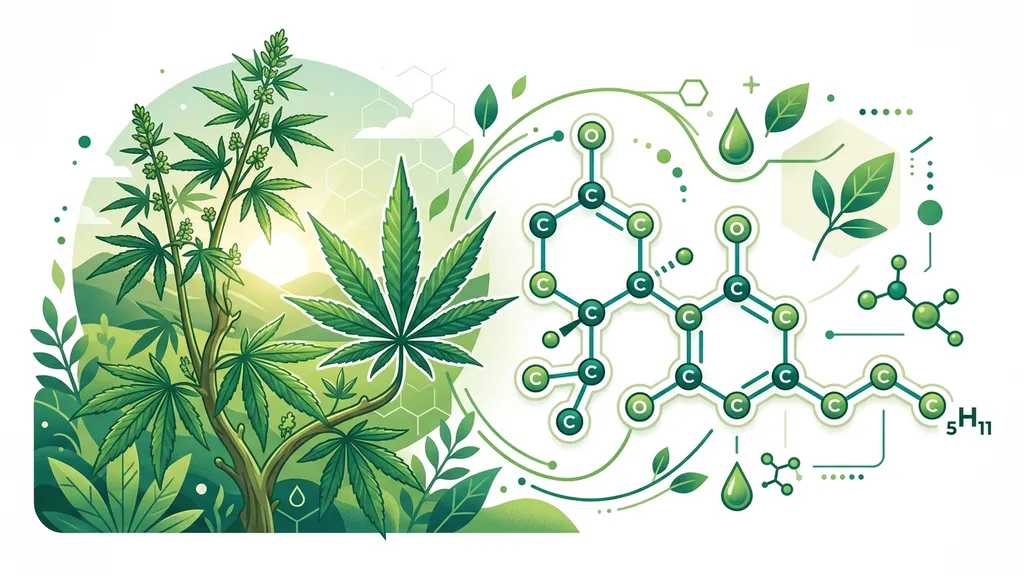
CBD is everywhere: from the shelves of health shops to the pages of medical journals. But what is CBD, really? Cannabidiol (CBD) is one of the most abundant cannabinoids found in cannabis plants, and unlike THC, it does not cause a high or any mind-altering effects. That single distinction has turned CBD from an obscure plant compound into one of the most talked-about wellness ingredients across Europe.
In this comprehensive guide, we explain what CBD is, how it works in the body, what the research says about its effects, the difference between CBD and THC, and where to find quality CBD products at a discount.
What Is CBD and Where Does It Come From?
Cannabidiol is a naturally occurring compound extracted from the hemp plant, a variety of the cannabis plant bred to contain low levels of THC. The hemp plant contains over 100 different cannabinoids, but CBD and THC (tetrahydrocannabinol) are the two most well-known.
CBD comes from the flowers, leaves and stalks of hemp. It is not the same thing as marijuana. While both hemp and marijuana belong to the cannabis family, hemp is defined by its low THC content: the EU CAP cap is below 0.3% (in force from 1 September 2026; previously 0.2%). In Europe, the Court of Justice of the European Union ruled in 2020 (the landmark Kanavape case) that CBD is not a narcotic.
Unlike THC, CBD does not cause euphoria or mind-altering effects. The World Health Organization concluded in its 2018 Critical Review that CBD does not present risks of abuse or dependence. That is why hemp-derived CBD products are widely available throughout Europe.
Few stories have shaped public perception of CBD as much as that of Charlotte Figi. Born in 2006 in Colorado, Charlotte suffered from Dravet syndrome, a rare form of epilepsy that caused hundreds of seizures per week. After conventional treatments failed to provide relief, her parents turned to a CBD-rich cannabis extract. The results were remarkable — Charlotte's seizures dropped dramatically. Her story became a catalyst for CBD research and legislation, and the specific hemp strain used was named "Charlotte's Web" in her honour. Charlotte passed away in 2020, but her legacy continues to influence how people think about cannabidiol around the world.
How CBD Works in the Body: The Endocannabinoid System
To understand the effects of CBD, you need to know about the endocannabinoid system (ECS). The ECS is a biological system found in all mammals, made up of receptors distributed throughout the body: in the brain, the nervous system, the immune system, and in organs and tissues.
The CB1 and CB2 Receptors
The two main receptors in the endocannabinoid system are:
- CB1 receptors: found primarily in the brain and the central nervous system. THC binds directly to CB1 receptors, which is why it produces mind-altering effects. CBD does not bind directly to CB1 receptors: this is the key reason CBD does not cause a high.
- CB2 receptors: distributed in the immune system and peripheral tissues. CBD can interact with CB2 receptors, modulating the body's inflammatory and immune response.
Serotonin Receptors and Beyond
CBD also interacts with other receptors in the body, including the serotonin receptor 5-HT1A, the TRPV1 channel and GPR55. CBD acts as a positive allosteric modulator of 5-HT1A, one of the pathways examined in studies on stress response and general well-being.
The endocannabinoid system plays a role in regulating sleep, pain, mood, appetite and immune function. By interacting with this system, CBD may support the body's natural balance: a state known as homeostasis.
A remarkable scientific fact: the human body produces its own cannabinoid-like molecules, called endocannabinoids, which were only discovered in the early 1990s. The first endocannabinoid identified was anandamide, named after the Sanskrit word "ananda" meaning bliss. Your body's endocannabinoid system contains more receptors than any other receptor system -- there are more CB1 receptors in the brain than there are receptors for serotonin or dopamine. This helps explain why plant-derived cannabinoids like CBD can interact so broadly with the body.
What the Research Says About CBD
Research on CBD's pharmacological profile is growing steadily. While more work is needed, here is what the current scientific literature covers.
Pain and Inflammation
Studies have examined how CBD interacts with receptors involved in the pain response, including TRPV1 and inflammatory mediators. The pharmacological picture is complex and still being characterised.
Serotonin and Mood
Bergamaschi et al. (2011, Neuropsychopharmacology) tested 600 mg of CBD in a small RCT on social anxiety patients and observed reduced anxiety scores during a simulated public speaking task. For a deeper look, read our guide on CBD and anxiety.
Sleep
Shannon et al. (2019, The Permanente Journal) reviewed records of 72 adults using CBD: 66.7% reported sleep improvements within the first month, with caveats typical of an open-label observational case series. Learn more in our article on CBD and sleep.
Epilepsy: The Approved Medical Use
The most significant medical use of CBD is in the treatment of rare paediatric epilepsies. Epidiolex, a prescription medicine containing purified CBD, was approved for seizures in Lennox-Gastaut and Dravet syndromes. The European Medicines Agency (EMA) granted marketing authorisation in 2019. Epidiolex remains the only CBD-based prescription medicine with full European regulatory approval.
Neuroprotective Research
Some preclinical work has examined whether CBD may have neuroprotective properties, making it a subject of interest for conditions like multiple sclerosis and other neurological disorders. Further work is needed to confirm these findings in humans.
Important: CBD Is Not a Cure-All
CBD products are not medicines. The research described above is ongoing. If you have a medical condition, consult your doctor before using CBD. CBD should not be used as a replacement for prescribed treatment.
CBD vs THC: The Key Differences
Understanding the difference between CBD and THC is essential for anyone interested in cannabis products.
| CBD (Cannabidiol) | THC (Tetrahydrocannabinol) | |
|---|---|---|
| Mind-altering effects | No, CBD does not cause a high | Yes, THC produces euphoria |
| Psychoactive | No | Yes |
| Status (EU) | Hemp-derived CBD widely available; CAP cap 0.3% THC for industrial hemp | Controlled substance above legal thresholds |
| Addiction risk | None (confirmed by WHO) | Possible |
| Drug test | Generally does not cause a positive result | Will cause a positive result |
| Medical use | Epidiolex (EMA-authorised for rare epilepsies) | Medical cannabis (prescription) |
CBD does not cause the mind-altering effects associated with THC. It does not produce euphoria, does not impair judgement and does not cause dependence. Hemp-derived CBD products are widely available across the European Union under the industrial hemp CAP cap of 0.3% THC (in force since 2023).
Both THC and CBD are cannabinoids found in cannabis, but they interact with the body in fundamentally different ways. THC binds directly to CB1 receptors in the brain, while CBD has low direct binding affinity and acts mainly through allosteric modulation of multiple targets — which is why CBD does not produce the "high" associated with marijuana.
CBD and the Regulatory Landscape
The regulatory landscape for CBD has evolved significantly in recent years across Europe. Here is what you need to know.
CBD in the European Union
In the European Union, CBD products derived from industrial hemp are commonly available when they meet the EU CAP cap (0.3% THC, in force since 1 September 2026; previously 0.2%). The landmark ruling came in September 2026, when the Court of Justice of the European Union (the Kanavape case, C-663/18) established that CBD is not a narcotic under EU law. The Court confirmed that EU member states cannot in principle prohibit the sale of CBD lawfully produced in another member state.
The European Food Safety Authority (EFSA) is currently evaluating CBD under the Novel Food Regulation. Until EFSA completes its assessment, CBD food supplements are subject to varying national rules across member states. CBD cosmetics, topicals and hemp-derived products for external use are widely available across the EU.
National Frameworks Across EU Member States
Individual European countries set their own additional rules: regulatory frameworks differ across Italy, France, Germany, Spain and other markets. The Italian framework is currently in evolution, with the Decreto Sicurezza 2024 and subsequent rulings of the Italian Supreme Court shaping practical application. France allows hemp flowers and leaves under 0.3% THC following the Conseil d'État ruling of September 2026. Germany updated its broader cannabis regulation through the Cannabisgesetz (CanG) in September 2026. Always verify the applicable rules at the time of purchase.
Types of CBD Products
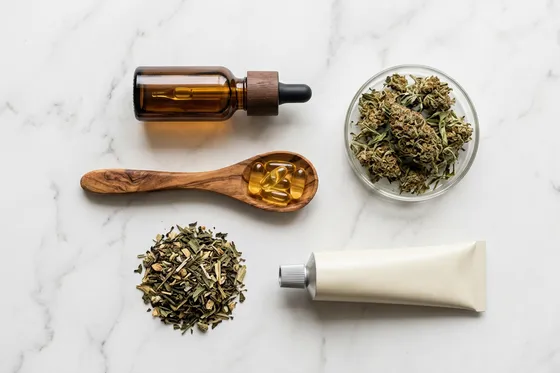
The market for CBD products is vast and growing. Here are the most common types of CBD products available.
CBD Oil
CBD oil is the most popular form of CBD. It is made by extracting cannabidiol from the hemp plant and diluting it in a carrier oil. CBD oil allows for fast absorption and comes in a wide range of concentrations. See our CBD oil guide.
CBD Flowers
CBD flowers are the dried buds of the hemp plant with high CBD and low THC. They can be used in a dry herb vaporiser or for making infusions. Discover CBD flowers.
CBD Hash
CBD hash is a concentrate made from the resin of the hemp plant. It has a higher concentration of CBD than flowers and a rich, earthy flavour. Explore CBD hash.
CBD E-Liquids
E-liquids infused with CBD are designed for use in vape devices. They offer a fast-acting way to consume CBD. Terpy is a leading specialist for CBD e-liquids. Browse CBD e-liquids.
CBD Extracts
Concentrates like wax, shatter, and moonrock offer the highest concentration of CBD. These are premium products for experienced users. See CBD extracts.
Where to Buy CBD Products
For high-quality CBD products, the most trusted online shops are:
- JustBob: flowers, hash, oil, extracts. Use the JustBob discount code for 15% off every order
- Terpy: CBD e-liquids for vaping. Use the Terpy discount code for 10% off
- SensorySeeds: cannabis seeds for collectors. Use the SensorySeeds discount code for 10% off
Shop CBD products with 15% off at JustBob
Side Effects of CBD: Is CBD Safe?
The World Health Organization has stated that CBD has a good safety profile. CBD does not cause addiction and does not produce mind-altering effects. However, like any substance, CBD can have side effects in some people:
- Dry mouth
- Drowsiness (at high doses)
- Changes in appetite
- Potential interactions with some medications
If you are taking medications, it is important to consult your doctor before using CBD products. CBD may interact with drugs metabolised by the liver through the cytochrome P450 enzyme system. This is particularly relevant for people taking blood thinners, anti-seizure medications, or other prescription drugs.
CBD products should be avoided during pregnancy and breastfeeding, as there is not enough research on the risk to the developing baby.
How to Choose Quality CBD Products
With so many CBD products on the market, choosing the right one can be overwhelming. Here are the key factors to consider.
Third-Party Lab Testing
The best CBD products come with certificates of analysis (COAs) from independent laboratories. These reports verify the CBD and THC content of the product and confirm the absence of contaminants like heavy metals, pesticides, and residual solvents. If a product does not have lab reports available, look for one that does.
Full Spectrum, Broad Spectrum, or Isolate?
- Full spectrum CBD: contains CBD along with other cannabinoids, terpenes, and a trace amount of THC (less than 0.3%). The combination of compounds may produce an enhanced effect known as the "entourage effect"
- Broad spectrum CBD: contains CBD and other cannabinoids, but with THC removed
- CBD isolate: pure CBD with no other compounds. Suitable for those who want to avoid any trace of THC
Hemp Source
Quality matters. Look for CBD products made from organically grown hemp. Products derived from European or American-grown hemp tend to have the highest quality standards.
Frequently Asked Questions About CBD
What is CBD?
CBD, short for cannabidiol, is a naturally occurring cannabinoid found in cannabis plants. It is one of the most abundant compounds in hemp and does not cause mind-altering effects. CBD is used in a wide range of products including oils, flowers, hash, e-liquids and extracts.
Does CBD get you high?
No. CBD does not cause a high. Unlike THC, cannabidiol does not produce euphoria or mind-altering effects. It does not bind to CB1 receptors in the brain the way THC does, which is why it does not cause intoxication.
What is the regulatory framework for CBD?
In the European Union, CBD products derived from industrial hemp with low THC content (CAP cap 0.3% since 2023) are widely available: the Court of Justice of the EU confirmed in 2020 that CBD is not a narcotic. National rules vary across EU member states, so check the applicable framework at the time of purchase.
Does CBD have side effects?
CBD is generally well tolerated. Possible side effects include dry mouth, drowsiness, and interactions with some medications. Consult your doctor if you are taking prescription drugs.
What is the difference between CBD and THC?
CBD and THC are both cannabinoids found in cannabis, but they have very different effects. THC causes mind-altering effects and can cause a high. CBD does not. THC binds to CB1 receptors in the brain; CBD does not.
What does research say about CBD?
Studies such as Shannon et al. (2019, The Permanente Journal) and Bergamaschi et al. (2011, Neuropsychopharmacology) have examined how CBD interacts with receptors involved in regulatory processes such as stress and sleep response. Further work — particularly randomised controlled trials — is needed, and CBD should not be used as a replacement for medical treatment.