Does CBD Show on a Drug Test? Risks, Timelines, and Solutions
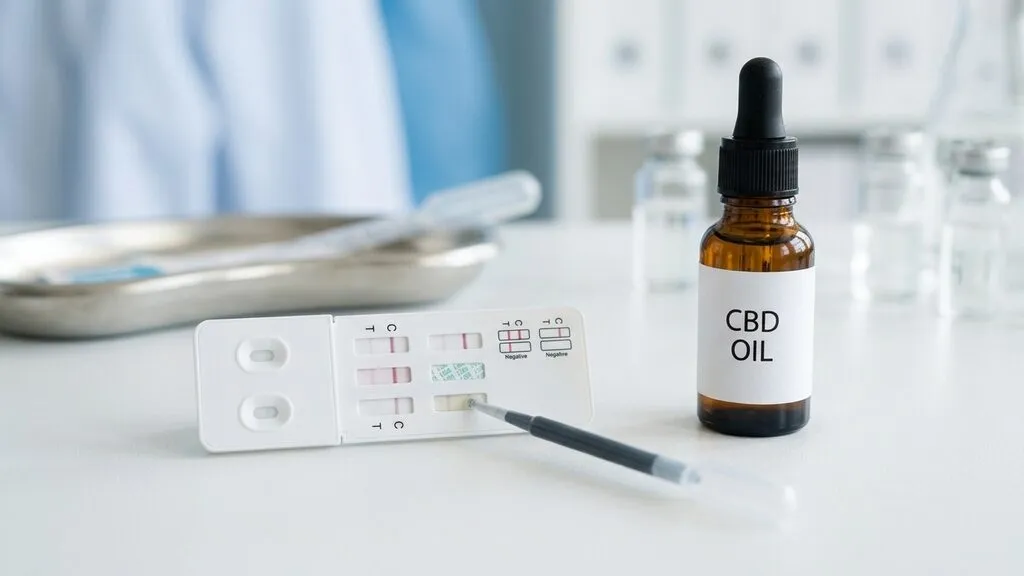
It's one of the most common questions from CBD users: does CBD show on a drug test? Whether you're subject to workplace screening, have a commercial driving licence, or simply want peace of mind, this concern makes total sense.
The short answer: no, CBD itself is not targeted by standard drug tests. But there's a catch: some CBD products like CBD flowers or full spectrum oils contain trace amounts of THC that can potentially cause issues. This guide breaks down exactly how drug tests work, what the real risks are, and how to keep yourself in the clear.
How different drug tests actually work
To understand whether CBD can get you in trouble during a screening, you first need to know what tests are looking for and how they operate.
Saliva tests
Saliva tests (also called oral fluid tests) are commonly used in roadside checks and some workplace screenings. They detect THC (delta-9-tetrahydrocannabinol) in your saliva, not CBD.
Saliva test characteristics:
- Target substance : THC and its metabolites
- Detection window : 6 to 24 hours after use (up to 72 hours for regular users)
- Detection threshold : varies by test kit, typically 15-50 ng/mL
- Common use : roadside testing, workplace screening
Saliva tests are designed to catch recent cannabis use. Pure CBD won't trigger a positive result.
Urine tests
Urine testing is by far the most common screening method in professional and medical settings. It looks for THC-COOH, a metabolite your body produces after processing THC.
Urine test characteristics:
- Target substance : THC-COOH (THC metabolite)
- Detection window : 3 to 30 days depending on frequency of use
- Standard threshold : 50 ng/mL (widely adopted across many testing protocols)
- Common use : workplace testing, probation, medical monitoring
Blood tests
James, a 33-year-old warehouse supervisor in Manchester, learned an important lesson about CBD and workplace testing. His company introduced random drug screening, and despite using only CBD isolate oil in the evenings, he became concerned. He proactively informed his occupational health advisor, presented the certificate of analysis showing 0.0% THC, and passed the test without issue. His experience highlights a practical reality: transparency and choosing certified, THC-free products are the most reliable safeguards for anyone subject to workplace testing.
Blood tests measure THC directly in your bloodstream. They're more accurate but also more invasive and expensive.
Blood test characteristics:
- Target substance : active THC and metabolites
- Detection window : 1 to 7 days (occasional use), up to 30 days (chronic use)
- Threshold : typically 1-5 ng/mL
- Common use : legal proceedings, traffic accidents, medical investigations
Hair follicle tests
Hair tests offer the longest detection window. They're rarely used for routine screening but can come up in certain legal or high-security employment contexts.
Hair test characteristics:
- Target substance : THC and metabolites incorporated into keratin
- Detection window : up to 90 days
- Common use : legal proceedings, high-security clearance jobs
Does CBD actually show up on drug tests?
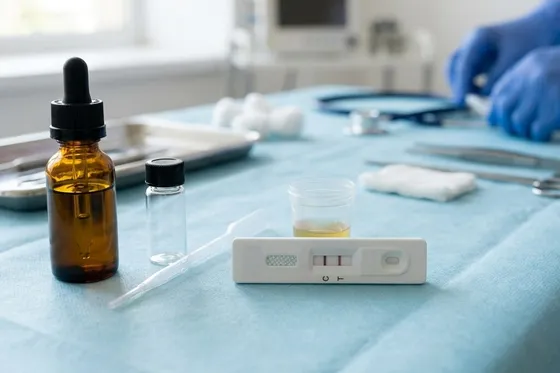
No. CBD (cannabidiol) is not a substance that drug tests look for. No standard test (saliva, urine, blood, or hair) targets CBD.
Tests are designed to detect THC and its metabolites, not CBD. These are two distinct molecules from the cannabis plant with completely different properties:
- THC is the psychoactive compound that gets you high
- CBD is not psychoactive and doesn't impair cognitive or motor function in any way
In theory, someone who only uses pure CBD should never test positive on a drug screening. But in practice, the risk exists for one specific reason: THC traces in CBD products.
The legal landscape around CBD and drug tests has produced some noteworthy court decisions in the UK. In 2022, an employment tribunal ruled in favour of a warehouse worker who had been dismissed after testing positive for THC, once he demonstrated the trace amounts came from a legitimate CBD product with compliant lab reports. The ruling reinforced the principle that employers should consider the source of THC rather than treating every positive result identically. While this does not set binding precedent for all cases, it has encouraged more nuanced approaches to workplace testing policies across several sectors.
Here is a comparison worth thinking about: saliva tests catch recent consumption (6-72 hours), urine tests can look back weeks (3-30 days), and hair follicle tests reach back months (up to 90 days). But the kicker is that each test type uses entirely different detection thresholds. A saliva test might miss what a urine test catches. This is why someone could pass a roadside check on Monday but fail a workplace urine screen on Wednesday from the exact same THC traces.
The real risk: THC traces hiding in CBD products
Here's where it gets tricky. Even though CBD itself won't show up, CBD products can contain trace amounts of THC.
Full spectrum products
Full spectrum CBD products contain all the natural cannabinoids from hemp, including THC traces. The EU CAP cap for industrial hemp has been 0.3% THC since 1 September 2026 (previously 0.2%); national rules on finished products vary across member states.
The problem: even at 0.3%, regular and heavy use of full spectrum products can lead to THC accumulating in your system. THC is fat-soluble: it stores in fatty tissue and gets released gradually over time.
A realistic risk scenario
Picture someone taking full spectrum CBD oil daily with 0.2% THC content:
- At high doses (100+ mg CBD per day), they're potentially consuming around 0.2 mg of THC daily
- THC builds up in body fat day after day
- After several weeks, the THC-COOH level in urine could cross the detection threshold
This scenario is unlikely at normal doses, but it's not impossible, especially for people who:
- Take high daily doses
- Have a slower metabolism
- Have a higher body mass index (more fat storage capacity)
- Use poorly controlled products where the actual THC content exceeds what's on the label
Broad spectrum and isolate products
Broad spectrum products (THC removed) and CBD isolates (pure CBD) theoretically contain no detectable THC. They're the safest choice for anyone subject to regular testing.
However, product quality matters enormously. Some products labelled "THC-free" may still contain residual traces if the purification process wasn't thorough enough.
How long CBD and THC stay in your system
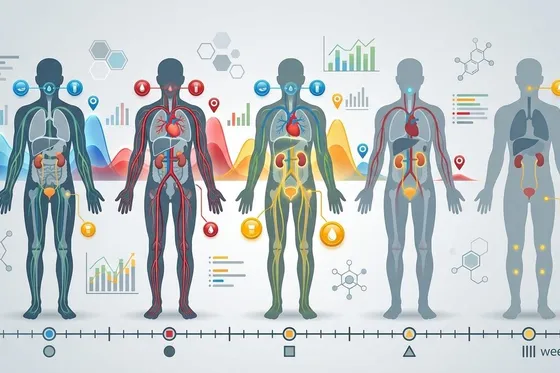
CBD itself has an estimated half-life of 18 to 32 hours. But the THC traces in certain CBD products follow a different timeline.
How long CBD sticks around
- Blood : 2-5 days after last use
- Urine : 3-7 days (occasional use), up to 2 weeks (daily use)
- Saliva : 24-72 hours
- Hair : up to 90 days (rarely tested for CBD)
How long THC from CBD products stays detectable
THC traces from full spectrum products remain detectable longer than CBD:
- Saliva : 6-72 hours
- Urine : 3-30 days depending on consumption
- Blood : 1-7 days (occasional use), up to 30 days (regular use)
- Hair : up to 90 days
Several factors influence elimination timing:
- How often and how much you consume
- Your individual metabolism
- Body fat percentage
- Hydration levels
- Physical activity
How to minimise drug test risks
If you're subject to regular drug screening (commercial driver, security clearance, probation), here's how to use CBD safely.
Choose THC-free products
This is the most effective strategy by far. Go for:
- CBD isolate : 99%+ pure CBD with zero THC traces
- Broad spectrum products : full cannabinoid profile minus the THC
- Products with a Certificate of Analysis (COA) proving non-detectable THC levels
Check the lab reports
Never trust the label alone. Demand third-party lab certificates that confirm:
- Exact THC content (ideally "not detected" or < 0.01%)
- The testing method used (HPLC or GC-MS)
- The date of analysis (should be recent)
Watch how much you take
If you stick with full spectrum products, keep your doses reasonable:
- Stay under 50 mg of CBD per day with full spectrum products
- If you need higher doses, switch to isolate or broad spectrum
- Split your intake across the day rather than taking one large dose
Pick a trustworthy supplier
Not all CBD brands maintain the same quality control standards. Look for brands that:
- Publish COAs for every batch
- Use certified European or American hemp
- Practice supercritical CO2 extraction
- Have an established reputation with verified reviews
JustBob provides transparent lab analyses and products that comply with EU regulations. Use code PROMO15 for 15% off your first order.
What to do if you test positive
If you get a positive result despite taking precautions, here's how to handle it.
At a traffic stop
If a roadside test comes back positive but you've only used legal CBD:
- Stay calm and cooperate fully
- Let them know you use legal CBD products
- Request a blood test for confirmation (it's more accurate)
- Keep your purchase receipts and COAs handy
At a workplace screening
- Inform the occupational health physician about your CBD use
- Provide the product's certificates of analysis
- Request a confirmatory test using GC-MS methodology
- Immunoassay screening tests can produce false positives
Request a confirmatory test
First-line tests (immunoassays) are rapid screening tools that can sometimes produce false positives. Confirmatory tests (GC-MS or LC-MS/MS) are far more precise and can distinguish between different cannabinoids.
You have the right to request a confirmatory test in most workplace and legal screening situations.
Discover CBD products at JustBob - 15% off
Check out our article on CBD and driving and the CBD legal Europe guide for more on cannabidiol regulations.
Does CBD Show Up on a Drug Test? CBD Products, THC and Workplace Testing
Does CBD show on a drug test is one of the most common questions asked before someone buys CBD oil or any other CBD products for the first time. Drug tests in the workplace screen for THC metabolites, not for CBD itself, so pure CBD is not detectable on a standard drug test. The risk comes from the THC content that ships with certain CBD products: full spectrum CBD oil contains trace THC (under 0.3% by law), and repeated daily use can make those trace amounts add up in the body and cause a positive drug test.
How to Avoid a Positive Drug Test Using CBD
If you are subject to regular drug testing (safety-critical jobs, professional sports, military), stick to CBD isolate or broad spectrum CBD products with a clean certificate of analysis showing "non-detectable" for THC. Check the product name and batch number against the third-party lab report. Urine drug tests and saliva drug tests have different detection windows, so timing matters: discontinue CBD products a week or two before a scheduled drug test when possible. The rule of thumb: if a drug testing protocol is strict, only use products that are explicitly labelled THC-free.
FAQ: CBD and drug tests
Can CBD cause a false positive on a saliva test?
Pure CBD does not cause false positives on saliva tests. However, full spectrum CBD products containing THC traces can, in certain cases, lead to a positive result. The risk is very low at normal doses but exists for heavy users of full spectrum products.
How many days before a test should I stop taking CBD?
If you use THC-free products (isolate or broad spectrum), you generally don't need to stop. For full spectrum products, a 7-14 day break before a scheduled test is usually sufficient to clear THC traces from your system.
Is smokable CBD riskier for drug tests?
Yes, CBD flower and full spectrum CBD vape products carry slightly higher risk. Hemp flower can have variable THC levels between batches, and vaping or smoking increases THC bioavailability. If you're subject to regular testing, steer clear of CBD flower.
Do employer drug tests detect CBD?
No, employer drug tests don't target CBD at all. They look for THC and its metabolites. However, as explained throughout this article, THC traces in certain CBD products can theoretically trigger a positive result.
Should I worry about topical CBD products (creams, balms)?
No, topical CBD products (creams, balms, salves) don't pose any meaningful risk for drug tests. CBD applied to the skin doesn't reach your bloodstream in relevant quantities, and any THC traces in topical products aren't absorbed in amounts large enough to be detectable.
Bottom line: CBD and drug tests are a manageable situation
CBD itself doesn't show up on drug tests. Period. The actual risk comes from THC traces lurking in some CBD products, particularly full spectrum ones.
To use CBD with confidence when facing drug screenings, the game plan is straightforward: pick broad spectrum or CBD isolate products, always check the lab reports, and stick with a reliable supplier like JustBob (code PROMO15 for 15% off).
Follow those simple steps and you can enjoy CBD's benefits without sweating the next drug test.
Related articles: