CBD Certificate of Analysis: Your Complete Guide to Reading a COA
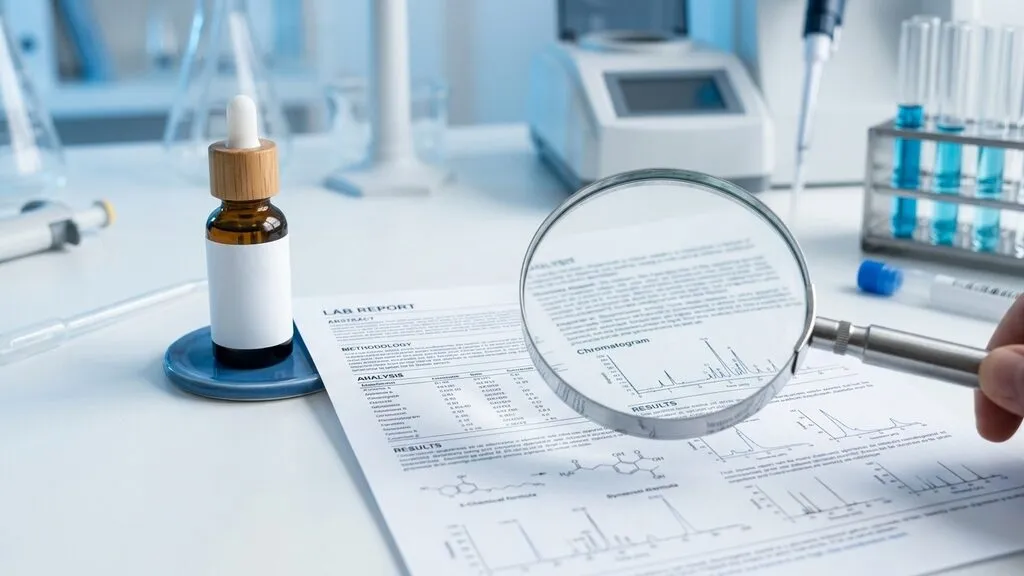
Would you buy a supplement without knowing what's inside? Probably not. Yet tons of people buy CBD products without ever checking a CBD certificate of analysis. That's basically like trusting the label on a mystery bottle from a random market stall.
A COA (Certificate of Analysis) is the only objective proof that your CBD product actually contains what the label says. Whether you are buying CBD oil or CBD flowers, it tells you the real cannabinoid content, whether contaminants are lurking inside, and if the THC level is within legal limits. Sounds important, right? In this guide, we'll break down everything you need to know: what a CBD certificate of analysis is, why it matters, how to read one step by step, and which red flags should make you walk away.
What Exactly Is a CBD Certificate of Analysis?
A CBD certificate of analysis is an official document produced by an independent laboratory after testing a CBD product. The report details the product's exact composition: cannabinoid concentrations, THC content, potential contaminants, and terpene profile.
Who Does the Testing?
Reliable COAs come from independent third-party labs: labs that have zero commercial ties to the brand being tested. These labs follow strict testing protocols, often accredited under ISO 17025 standards, and use precision equipment like High-Performance Liquid Chromatography (HPLC) or Gas Chromatography (GC).
Why Third-Party Testing Is Non-Negotiable
If a brand shows you test results they ran in-house, that's a yellow flag right there. Without external verification, there's no guarantee the numbers haven't been tweaked. An independent lab puts its reputation and accreditation on the line: it has zero incentive to fudge the results.
Why COAs Matter More Than You Think
The CBD market has grown massively over the past few years, but regulation still hasn't fully caught up. In this wild-west-ish landscape, the CBD certificate of analysis serves several critical functions.
Safety First
The COA checks for harmful substances in your product: heavy metals like lead, mercury, and arsenic, pesticides, residual solvents from extraction, and pathogenic microorganisms. Without this check, you could be consuming a contaminated product without having a clue.
Potency Verification
The label says "10% CBD oil"? The COA either backs that up or calls it out. Research has shown that some CBD products sold online contain significantly less CBD than advertised, and in some cases, none at all. The certificate of analysis gives you the actual concentration, measured in a lab.
How bad is the mislabelling problem? Independent surveys of the CBD market — including widely cited work by Bonn-Miller et al. published in JAMA — have found that roughly half of CBD products tested were inaccurately labelled: some contained far less CBD than claimed, while others exceeded the relevant THC limit. Only about half matched their labels within an acceptable margin. This kind of data is exactly why COAs from independent labs aren't just nice to have: they are essential.
THC Threshold Reference
The EU CAP cap for industrial hemp is 0.3% THC since 1 September 2026. National rules vary: in Italy, Law 242/2016 sets a 0.2% threshold for cultivation with tolerance up to 0.6%. The COA precisely measures the THC content in the finished product, providing a useful data point to verify alignment with the industrial hemp framework.
Brand Transparency
A brand that openly publishes its COAs on its website is essentially saying "we've got nothing to hide." That's a strong signal of professionalism. On the flip side, a brand that refuses to share its lab reports should raise some serious eyebrows.
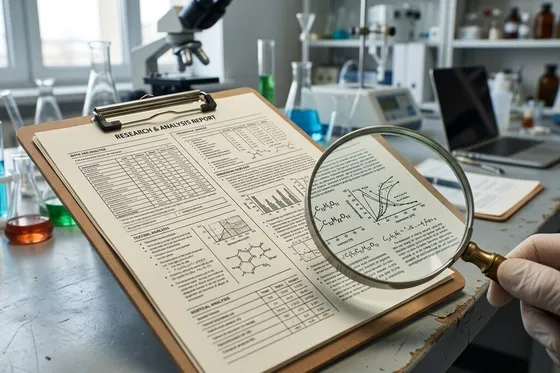
How to Read a CBD Certificate of Analysis Step by Step
A COA might look intimidating at first glance with all those numbers and abbreviations. But once you know where to look, it's actually pretty straightforward. Here are the key sections to check.
1. General Report Information
At the top of the document, you'll find:
- Lab name and its accreditations
- Test date: a recent test (less than 12 months old) is preferable
- Batch number: this must match the number on your product
- Product name and manufacturer
Always verify that the batch number on your product matches the one on the COA. If they don't match, the report might not be about your specific product.
2. Cannabinoid Profile
This is the most important section. It lists every cannabinoid detected and its concentration:
- CBD (cannabidiol): the value should match what's on the label, with an acceptable tolerance of about 10-15%
- THC (delta-9-tetrahydrocannabinol): typically expected below 0.3% for industrial hemp products under the EU CAP cap
- CBG, CBN, CBC and other minor cannabinoids, their presence indicates a full-spectrum or broad-spectrum product
Results are expressed in milligrams per gram (mg/g) or percentage (%). If your oil is labelled as 10% CBD, the COA should show roughly 100 mg/ml of CBD.
3. THC Content: The Critical Line
Pay extra attention to the delta-9-THC and total THC values. Total THC includes delta-9-THC plus THCA (the acid precursor that converts to THC when heated). Some labs report both values: it's the total THC that counts for legal compliance.
If total THC exceeds 0.3%, the product falls outside the EU CAP cap for industrial hemp. The threshold is a strict parameter to verify carefully, even when differences seem minimal.
4. Terpene Profile
Terpenes are the aromatic molecules in hemp that give each strain its unique smell and flavour. They also potentially contribute to the product's effects through what's known as the entourage effect. A detailed COA lists the identified terpenes:
- Myrcene: the most common terpene in hemp
- Limonene: citrusy notes
- Linalool: lavender-like notes
- Beta-caryophyllene: peppery, spicy notes
A rich terpene profile is generally a quality indicator, especially for full-spectrum products.
5. Heavy Metals
This section tests for potentially toxic metals:
- Lead (Pb): the most concerning
- Arsenic (As)
- Mercury (Hg)
- Cadmium (Cd)
Each metal has a maximum allowable threshold. The result should show "Pass" or a value below the limit. "ND" (Not Detected) is the best possible outcome. Hemp is a natural bioaccumulator: it readily absorbs metals from the soil, which makes this test especially crucial.
6. Pesticides
The report screens for dozens of common pesticides. Even organically grown hemp can be subject to cross-contamination. Each pesticide has a tolerance threshold: ideally, all should show "ND" (not detected) or "Pass."
The most commonly monitored pesticides include:
- Organophosphates
- Organochlorines
- Pyrethroids
- Common herbicides
7. Residual Solvents
If the CBD was extracted using chemical solvents (ethanol, butane, propane, hexane), traces can remain in the finished product. The COA measures these residues and compares them against acceptable limits.
Supercritical CO2 extraction typically leaves little to no solvent residue. If your product was CO2-extracted, this section should show very low values or "ND."
8. Microbiological Testing
This section checks for the absence of:
- Mould and yeast: above certain thresholds
- Pathogenic bacteria: E. coli, Salmonella
- Aflatoxins: toxins produced by certain moulds
A product that fails microbiological testing should never be consumed. These contaminations can cause serious health issues, particularly for immunocompromised individuals.
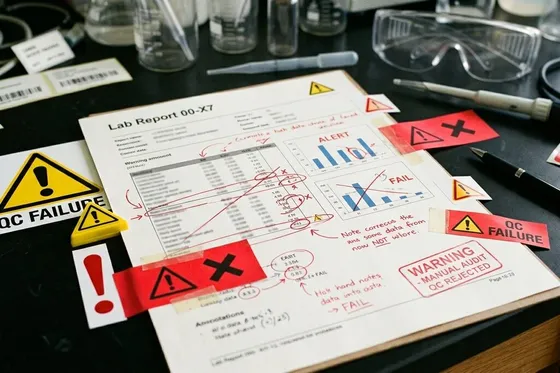
Red Flags to Watch For on a COA
Not all COAs are created equal. Here are the warning signs that should set off alarm bells.
No Identifiable Lab
If the COA doesn't clearly state the lab's name, contact details, and accreditations, that's suspicious. A legitimate COA is always signed by an identifiable chemist or quality manager.
Test Date Is Way Too Old
A COA older than 12 months isn't reliable anymore. Product composition can change over time: cannabinoids degrade, and storage conditions affect quality.
Missing or Mismatched Batch Number
If the COA doesn't include a batch number, or if the number doesn't match your product, the report might not apply to what you actually bought.
Incomplete Results
A COA that only tests cannabinoids but skips heavy metals, pesticides, and residual solvents is only telling half the story. A complete report covers at minimum: cannabinoids, THC, heavy metals, pesticides, and microbiology.
Big Gap Between Label and Lab
If the label claims 1000 mg of CBD but the COA measures 600 mg, something's seriously off. A discrepancy of more than 10-15% from what's advertised should send you looking elsewhere.
Manufacturer's Logo on the COA
A real lab report carries the lab's logo and letterhead, not the CBD brand's. If the COA looks like it was designed by the company itself, it's probably not trustworthy.
Where to Find CBD Certificates of Analysis
Reputable brands make their COAs easy to find. Here's where to look.
On the Brand's Website
Most quality brands publish their COAs in a dedicated section: "Lab Reports," "Certificates," "Testing," or "Transparency." Some integrate them directly on the product page.
For example, JustBob makes lab analyses available for their CBD products, letting you verify quality before buying. Use code PROMO15 for 15% off your order.
Via a QR Code on the Packaging
More and more brands are adding QR codes to their packaging. Scan it with your phone and you'll go straight to the COA for your specific product batch. It's the most convenient and reliable system.
By Contacting Customer Support
If COAs aren't published online, reach out to the brand's customer service. A serious company will send you the report within 24 to 48 hours. If they refuse or say they don't have COAs, take your business elsewhere.
How to Use a COA to Pick the Right CBD Product
Now that you know how to read a CBD certificate of analysis, here's how to put that knowledge to work when shopping.
Check Before You Buy
Before placing an order, look up the COA for the product you're interested in. Compare the advertised CBD concentration with what the lab actually measured. Verify THC compliance. Review the purity results.
Compare Across Brands
COAs let you make apples-to-apples comparisons between different brands. Two 10% CBD oils aren't necessarily equal: one might have a richer cannabinoid profile, fewer contaminants, or a better match between what's on the label and what's in the bottle.
Think of it like comparing nutrition labels at the supermarket. You wouldn't buy protein powder without checking whether it actually contains the protein it claims, and you certainly wouldn't trust a brand that slaps "high protein" on the front but won't show you the actual breakdown on the back. COAs are the CBD world's version of that breakdown, and once you start reading them, you'll never go back to blind buying.
Keep Your COAs
If you find a product you like, note the batch number and save the COA. It'll come in handy if there's ever an issue or if you want to reorder the exact same batch.
Discover CBD products at JustBob - 15% off
Check out our organic CBD guide and our full spectrum vs isolate CBD comparison for more on CBD quality.
How to Read Lab Results on a Certificate of Analysis (COA)
A Certificate of Analysis COA reports the lab results for one specific product batch, not for a brand as a whole. On the first page you should see the product name, the lot number, the product batch identifier, the accredited lab logo and a QR code that links back to the lab's internal record. On the next pages each cannabinoid (CBD, THC, CBG, CBN, CBC) is reported by weight, with potency expressed as a percentage and as mg per serving. Terpenes, when tested, appear on a dedicated page.
Heavy Metal Analysis, Purity and Full Spectrum Verification
A complete COA includes a heavy metal analysis (lead, arsenic, cadmium, mercury), a pesticide and residual solvent screen, and microbial contamination testing. These together determine the purity of the product. For a full spectrum product, the COA also verifies the presence of minor cannabinoids and terpenes alongside the main CBD content, which is the information buyers need to confirm real full spectrum vs broad spectrum or isolate. Effects and health claims belong on the brand's website, not on the COA itself. When the lab results align with what the label says, you are looking at a transparent product.
FAQ About CBD Certificates of Analysis
What is a COA in the CBD world?
A COA (Certificate of Analysis) is a lab report from an independent laboratory that details a CBD product's exact composition: cannabinoid concentrations, THC levels, contaminant presence (heavy metals, pesticides, solvents), and microbiological results. It's the go-to document for verifying product quality and safety.
How do I know if a CBD certificate of analysis is legit?
A legit COA shows the lab's name and logo (not the brand's), a recent test date, a batch number matching your product, and the lab's accreditations. It should cover at minimum the cannabinoid profile, heavy metals, pesticides, and microbiology.
Does the THC level on a COA have to be zero?
Not necessarily. Full-spectrum products naturally contain small amounts of THC. What matters is that total THC stays consistent with the industrial hemp framework (EU CAP cap of 0.3% since 2023; in Italy, Law 242/2016: <0.2% with tolerance 0.6% for cultivation). Broad-spectrum products and isolates should show THC close to zero or "ND" (Not Detected).
What should I do if a brand refuses to provide their COA?
That's a major red flag. A reputable brand has no reason to hide its lab results. If a seller refuses to share their COA or claims they don't have one, we'd recommend steering clear of their products and going with transparent brands instead.
How often should COAs be updated?
A COA should be renewed for every new production batch. Generally, a report less than 12 months old is considered reliable. The most serious brands test every batch and regularly update the reports on their website.
The Bottom Line: Make COAs Your CBD Shopping Habit
The CBD certificate of analysis is hands-down your best tool for buying CBD with confidence. Get into the habit of checking the COA before every purchase: it's the only way to objectively verify what's in your product and make sure it's pure, potent, and legal.
Brands that invest in regular testing by independent labs deserve your trust. To discover quality CBD products with accessible lab reports, check out JustBob and use code PROMO15 for 15% off.
Related articles: