CBD Oil vs Hemp Oil: Everything You Need to Know About the Differences
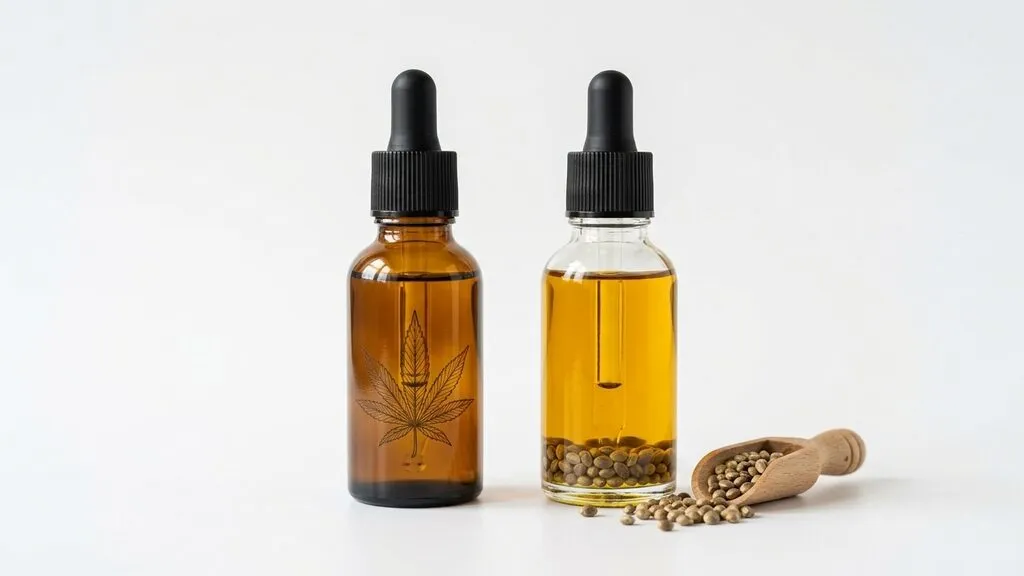
CBD oil vs hemp oil is one of the most common mix-ups in the wellness world, and honestly, it is not hard to see why. Both products come from the same plant species, both have "hemp" in the name and some brands are not exactly helping clear things up. But here is the thing: CBD oil and hemp oil (also called hemp seed oil) are fundamentally different products with different ingredients, different purposes and very different price tags.
Some companies actually exploit this confusion on purpose, selling cheap hemp oil under labels that strongly imply it is CBD oil. In this guide we set the record straight once and for all, so when you compare CBD oil vs hemp oil you know exactly what you are buying and never get tricked again.
What Is CBD Oil?
CBD oil (cannabidiol oil) is extracted from the flowers, leaves, and stalks of the hemp plant (Cannabis sativa L.). These are the parts of the plant where cannabinoids, including CBD, are concentrated.
How CBD Oil Is Made
CBD extraction primarily happens through three methods:
- Supercritical CO2 extraction: the cleanest and most precise method. CO2 under high pressure pulls out CBD and other cannabinoids without leaving chemical residues behind.
- Ethanol extraction: hemp is soaked in food-grade alcohol that dissolves the cannabinoids. The solvent is then evaporated off.
- Hydrocarbon extraction: uses butane or propane. Cheaper but comes with the risk of residual solvents in the finished product.
The resulting extract is then diluted in a carrier oil (MCT coconut oil, olive oil, or hemp seed oil) to create the final product you see on shelves.
What's Actually in CBD Oil
CBD oil is packed with active compounds:
- CBD (cannabidiol): the main cannabinoid, non-psychoactive
- Minor cannabinoids: CBG, CBN, CBC in full-spectrum versions
- Terpenes: aromatic molecules that contribute to the entourage effect
- Flavonoids: compounds with antioxidant properties
- Trace THC: below 0.3% in industrial hemp products under the EU CAP cap (2023)
CBD concentration typically ranges from 5% to 30%, depending on the product.
What Is Hemp Seed Oil?
Hemp seed oil (sometimes just called "hemp oil", and therein lies the confusion) is obtained by cold-pressing the seeds of the hemp plant. The crucial distinction is right there: it comes from the seeds, not the flowers or leaves.
A shopkeeper at a health food store in Bristol shared an illuminating observation: roughly half of the customers who asked for "hemp oil" were actually looking for CBD oil, and vice versa. The confusion stems from inconsistent labelling and marketing. In German, the problem is even worse, as "Hanfoel" can technically refer to either product. Some retailers have started placing comparison charts next to their displays to help customers distinguish between the two. The takeaway is clear: always check the label for "cannabidiol" or "CBD" content rather than relying on the product name alone.
How Hemp Seed Oil Is Made
The process is basically the same as making olive oil or sunflower oil:
- Hemp seeds are cleaned and hulled
- They're mechanically cold-pressed (without excessive heat)
- The resulting oil is filtered and bottled
It's a standard food production process with zero cannabinoid extraction involved.
What's Actually in Hemp Seed Oil
Hemp seed oil is a nutritious food product, but its composition is worlds apart from CBD oil:
- Essential fatty acids: omega-3 and omega-6 in an ideal ratio (roughly 3:1)
- Vitamins: E, B1, B2, B6
- Minerals: magnesium, potassium, calcium, iron, zinc
- Proteins: essential amino acids
- Zero CBD: or negligible traces
- Zero THC
Hemp seed oil is fantastic for cooking and skincare, but it does not contain the cannabinoids associated with CBD. None. Zero. Zilch.
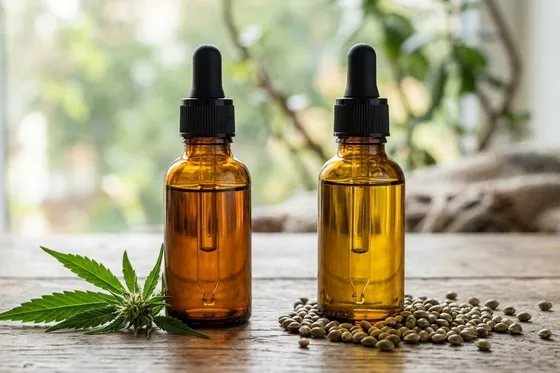
The Key Differences Between CBD Oil and Hemp Seed Oil
To settle the CBD oil vs hemp seed oil debate once and for all, here's a detailed side-by-side comparison.
Comparison Table
| Factor | CBD Oil | Hemp Seed Oil |
|---|---|---|
| Source | Flowers, leaves, and stalks | Seeds |
| CBD content | 5%-30% (varies by product) | None or negligible traces |
| THC content | Below 0.3% (EU CAP cap, industrial hemp) | None |
| Extraction method | Supercritical CO2, ethanol | Cold-pressing |
| Primary use | Wellness, relaxation, balance | Cooking, nutrition, skincare |
| Average price | 30-150 euros (30 ml) | 5-15 euros (250 ml) |
| Cannabinoids | CBD, CBG, CBN, CBC... | None |
| Terpenes | Yes (full-spectrum) | None or negligible |
| Regulation | Cannabinoid-based product | Food product |
Why the Price Difference Is So Huge
The price gap is massive and totally justified. CBD extraction requires specialised equipment (supercritical CO2 systems), specific raw materials (CBD-rich hemp flowers), third-party lab testing, and rigorous quality control. Hemp seed oil is produced by simple cold-pressing, a much cheaper process.
If you find a "CBD oil" at a suspiciously low price, there's a solid chance it's actually hemp seed oil being sold under a misleading name.
Rachel, 40, runs a small health food shop in Bristol. She recalls a week in 2024 when three different customers came in asking for "hemp oil." Each time, she had to explain the difference: the hemp seed oil on her shelves was a cooking oil rich in omega fatty acids, while CBD oil -- extracted from the flowers and leaves -- was the product they were actually looking for. She now keeps a small card next to the hemp seed oil shelf that reads "This is a food oil, not a CBD product," and says it has eliminated the confusion almost entirely.
Common Confusion and Marketing Tricks to Watch Out For
The blurry line between these two products is a goldmine for misleading marketing. Here's how some brands exploit the confusion.
The "Hemp Oil" Ambiguity
Here's a fun fact that perfectly illustrates this confusion: Amazon has long banned the sale of CBD products on its platform, but it happily allows hemp seed oil. The result? A cottage industry of sellers listing "hemp oil" with CBD-style packaging, cannabis leaf imagery, and dropper bottles, knowing full well that shoppers will confuse the two. Some listings even include wink-nudge language without ever mentioning CBD directly. It's a masterclass in exploiting a terminology gap, and it's cost consumers millions in disappointing purchases.
The term "hemp oil" can technically refer to either CBD oil or hemp seed oil. Some dodgy sellers deliberately use this ambiguity to sell cheap hemp seed oil while strongly implying it's CBD oil. They know shoppers will see "hemp oil" and assume they're getting CBD.
Misleading Labels to Watch For
Be sceptical of products that show:
- "Hemp oil" without specifying CBD concentration: it's probably seed oil
- "Hemp 1000 mg" without specifying if it's CBD: that could mean 1000 mg of hemp seed oil, not CBD
- Cannabis leaves on the packaging with seed oil inside: purely visual marketing designed to mislead
- "Full spectrum hemp extract": verify that the certificate of analysis actually confirms CBD content
On Online Marketplaces
Major online platforms are flooded with ambiguous products. Sellers know that words like "hemp" and "cannabis" attract consumers searching for CBD. Read the description carefully, check the ingredients, and always look for a certificate of analysis before buying.
When to Use CBD Oil vs Hemp Oil: Practical Scenarios
Each oil has its own strengths. The choice comes down to what you actually need.
When to Choose CBD Oil
CBD oil is the right call if you're looking for:
- Relaxation support: CBD interacts with the endocannabinoid system
- A wellness supplement: many people work it into their daily routine
- A calming context: CBD is commonly chosen by people exploring wellness approaches
- A product with active cannabinoids: the entourage effect (full-spectrum) combines CBD, terpenes, and other cannabinoids for a broader profile
To discover quality CBD oils, check out JustBob and grab 15% off with code PROMO15.
When to Choose Hemp Seed Oil
Hemp seed oil is your best bet for:
- Cooking: excellent nutritional supplement, loaded with essential fatty acids, great as a dressing (don't heat it though)
- Skincare: moisturising, non-comedogenic, vitamin-rich
- Hair care: nourishes dry and damaged hair
- Nutritional support: omega-3, omega-6, vitamins, and minerals
Can You Use Both?
Absolutely. These two products aren't competitors, they're complementary. You can use CBD oil for wellness and hemp seed oil in the kitchen or as a skincare product. In fact, some CBD oils actually use hemp seed oil as their carrier oil, combining the characteristics of both in one bottle.
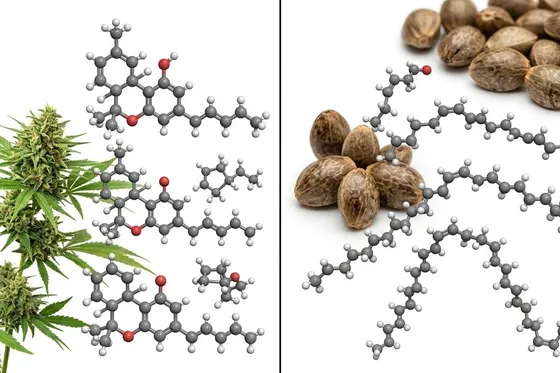
How to Read Labels Like a Pro
To never mix up CBD oil and hemp seed oil again, here's what to look for on the label.
What a Real CBD Oil Should Show
- CBD concentration clearly stated (in mg or percentage)
- Spectrum type: full-spectrum, broad-spectrum, or isolate
- Extraction method: supercritical CO2 ideally
- Ingredients list mentioning cannabidiol or hemp extract (not just "hemp oil")
- Certificate of analysis accessible (batch number, link, or QR code)
What Hemp Seed Oil Looks Like
- Ingredients: hemp seed oil (Cannabis sativa seed oil) only
- Nutritional information typical of a cooking oil (fats, fatty acids, calories)
- No mention of CBD, cannabinoids, or milligram concentrations
- Store section: usually sold in the food or beauty aisle, not the CBD wellness section
The Golden Rule
The difference is a bit like comparing orange juice to orange-scented cleaning spray. Both say "orange" on the label. Both might even look similar in colour. But you definitely don't want to drink the cleaning spray, and you definitely don't want to clean your kitchen with juice. Same plant name, completely different products, and that's exactly the situation with CBD oil and hemp seed oil.
If the label doesn't explicitly mention a CBD concentration (in mg or %), it's almost certainly not CBD oil. It really is that straightforward.
Discover CBD products at JustBob - 15% off
Check out our CBD lab certificate guide, our full spectrum vs isolate CBD comparison, and tips on how to store CBD products properly.
Hemp Oil or CBD Oil? Which Is Right for Your Needs
Choosing hemp oil or CBD oil comes down to what you actually want. If you want the nutritional benefits of hemp (omega 3 and omega 6 essential fatty acids, plant-based protein, antioxidants), plain hemp oil is the answer and the price stays low. If you are interested in CBD as a wellness compound, CBD oil is the product you need, and the price reflects the extraction and purification work behind every bottle.
Benefits of Hemp Oil (Hemp Seed Oil)
The benefits of hemp oil are rooted in its fatty acid profile. A standard hemp seed oil provides a 3:1 ratio of omega 6 to omega 3, which is nutritionally relevant. Hemp oil is used in salad dressings, smoothies and topical cosmetics. It contains no cannabinoids from the cannabis plant, so it does not provide the compounds associated with CBD oil.
When CBD Oil vs Hemp Oil Matters Most
For wellness support related to CBD, CBD oil is the correct choice: the more plant compounds you get (full spectrum vs isolate), the more likely you are to experience the entourage effect. For kitchen or skincare use, hemp oil wins on price and versatility. Some households keep both oils on hand for different purposes.
FAQ About CBD Oil vs Hemp Oil
Does hemp seed oil contain CBD?
No, or only in negligible amounts. Hemp seed oil is made by cold-pressing seeds, which don't contain significant cannabinoids. Only the flowers, leaves, and stalks of the plant contain meaningful amounts of CBD.
Why is CBD oil so much more expensive than hemp seed oil?
CBD extraction requires specialised equipment (supercritical CO2 systems), specific raw materials (CBD-rich hemp flowers), independent lab testing, and strict quality control. Hemp seed oil is produced through simple cold-pressing, a far less expensive process.
Can I use hemp seed oil instead of CBD oil?
No, the two products aren't interchangeable. Hemp seed oil is a great food and skincare product, but it contains no CBD and therefore does not offer the same compound profile. If you're after CBD, you need actual CBD oil.
Can hemp seed oil cause a positive drug test?
No. Hemp seed oil contains neither CBD nor THC in measurable quantities. It therefore can't trigger a positive drug test result. Full-spectrum CBD oil, on the other hand, contains trace amounts of THC (below 0.3%) which could theoretically be detected by very sensitive tests.
How do I verify my product actually contains CBD?
The best way is to check the product's certificate of analysis (COA). This document, issued by an independent laboratory, confirms the actual CBD concentration. Make sure the batch number matches your product and the report is recent.
Bottom Line: Know What You're Buying
The difference between CBD oil vs hemp seed oil is fundamental: one contains active cannabinoids extracted from hemp flowers, the other is a nutritious food oil pressed from seeds. Both are excellent products, but they serve completely different purposes.
Don't let ambiguous marketing fool you. Read the labels, check the CBD concentration, and always look at the certificate of analysis. For quality CBD oils with transparent lab reports, check out JustBob and use code PROMO15 for 15% off.
Related articles: