How to Store CBD Oil and Keep Your Products Fresh
You have picked up some quality CBD oil, hemp flowers, or cannabidiol extracts. But did you know that how you store these products directly determines how long they last and how well their properties hold up? Bad storage can break down CBD and terpenes in just a few weeks.
Good news: storing your CBD products properly requires zero special equipment. You just need to understand the factors that speed up degradation and build a few simple habits. This guide covers every product you might find at a speciality shop: oils, flowers, hash, extracts, and e-liquids.
The three enemies of CBD
Three main factors degrade cannabidiol and other hemp compounds. Knowing them is the key to keeping your products in top shape.
1. Light
Light, especially ultraviolet rays, accelerates CBD breakdown through a process called photodegradation. UV photons break the molecular bonds of cannabidiol, gradually converting CBD into inactive compounds.
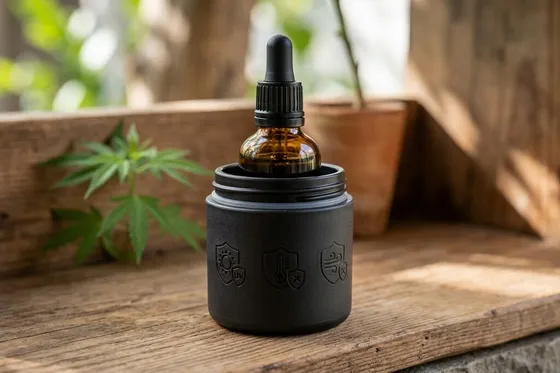
That is why quality CBD oils come in tinted glass bottles (amber or dark blue). This glass filters the most destructive wavelengths while still letting you see how much product is left.
2. Heat
High temperatures speed up the chemical reactions that degrade CBD and terpenes. Above 35 degrees Celsius, degradation ramps up significantly. Terpenes -- those aromatic molecules that give CBD flowers their distinctive scents -- are especially volatile and start evaporating at relatively low temperatures.
3. Air (oxidation)
Oxygen triggers an oxidation process that alters CBD's molecular structure. This chemical reaction is slow but relentless: every time you open a container, you expose the product to fresh air. Some oils change colour over time, shifting from light amber to a darker brown -- often a sign of advanced oxidation.
To understand cannabidiol better, check out our complete guide to CBD.
How to store CBD oil
CBD oil is probably the most sensitive product when it comes to storage conditions, since its liquid form exposes a large surface area to degradation factors.
Ideal storage conditions
| Factor | Recommendation |
|---|---|
| Temperature | Between 15 and 25 degrees C (cool room temperature) |
| Light | Away from direct light, in a cupboard or drawer |
| Air | Bottle tightly sealed after every use |
| Position | Upright, to minimise the surface area exposed to air |
Practical tips for CBD oil
- Close the bottle immediately after each use. Every second of air exposure adds up over time.
- Never leave the bottle on a windowsill, even in winter. UV rays pass through regular glass.
- Skip the bathroom: humidity and temperature swings from showers speed up degradation.
- The fridge works well for oils you do not use daily. The oil may thicken in the cold -- take it out 10 minutes before use.
- Do not freeze CBD oil: repeated freezing and thawing can alter the emulsion structure.
An interesting piece of industry history: when the premium CBD brand Endoca began scaling production in the mid-2010s, they encountered a shelf-life problem -- batches shipped to warm climates were degrading far faster than expected. Their solution was nitrogen-flushed packaging, a technique borrowed from the speciality coffee and pharmaceutical industries. By displacing the oxygen inside each bottle with inert nitrogen gas before sealing, they nearly doubled the shelf life of their oils. Today, nitrogen flushing has become standard practice among high-end CBD brands, but many budget products still skip this step. If you spot "packaged under nitrogen" or "nitrogen-sealed" on a label, that is a good indicator of a brand that takes quality seriously.
Here is a scientific detail that explains why storage matters more than most people realise: when CBD oxidises, it does not just lose potency in a straightforward way. The oxidation process converts CBD into hydroxy-quinone derivatives, which are structurally distinct molecules that no longer interact with cannabinoid receptors in the same manner. Research published in the journal Cannabis and Cannabinoid Research showed that improperly stored CBD oil can lose up to 20% of its cannabidiol content within just three months of opening. The takeaway is clear: every minute your bottle spends open and exposed to air is actively transforming the product you paid for into something less effective.
CBD oil shelf life
A properly stored CBD oil stays at its best for 12 to 18 months after opening. After that, it does not become dangerous, but its CBD content gradually decreases.
For more on oils, check out our CBD oil guide.
How to store CBD flowers
CBD hemp flowers are a plant product that needs particular attention to preserve their terpenes, aromas, and texture.
The golden rules of flower storage
Recommended containers:
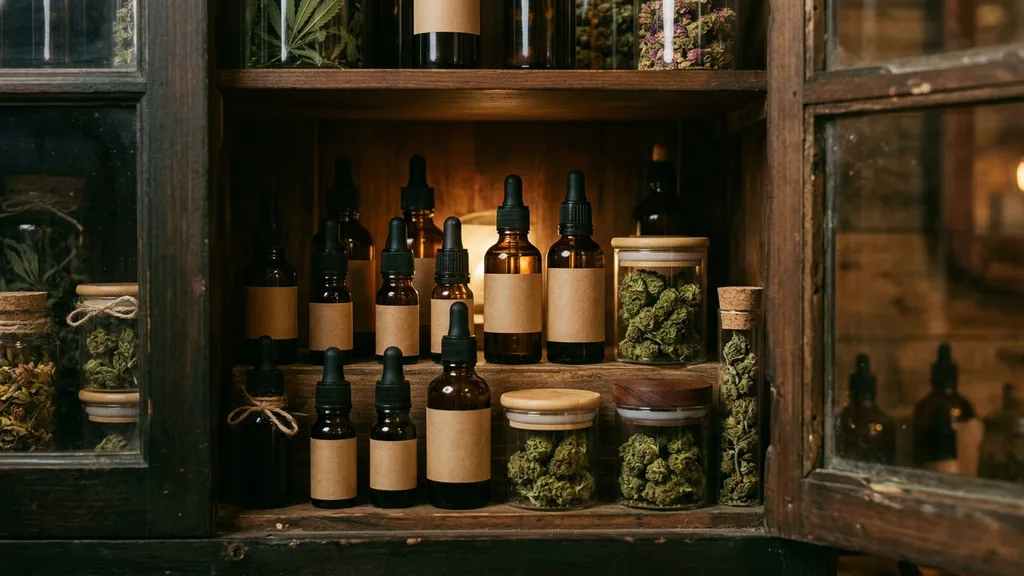
- Tinted glass jars with an airtight lid: the gold standard for flower storage
- Clear glass jars: acceptable if kept in a dark spot
- Airtight food-grade bags: temporary solution for a few days
Containers to avoid:
- Regular plastic bags (trap moisture and create static that knocks off trichomes)
- Unlined metal tins (can alter the taste)
- Untreated wooden containers (absorb terpenes)
Humidity: the critical factor
For CBD flowers, the ideal relative humidity sits between 55 and 62%. Below that, flowers become brittle and terpenes evaporate too fast. Above that, mould becomes a real risk.
Humidity-regulating packs (like Boveda or Integra Boost) placed inside the jar automatically maintain the ideal moisture level. A small investment that makes a huge difference.
Ideal temperature for flowers
Keep your CBD flowers between 15 and 21 degrees C. Temperatures above 25 degrees speed up drying and terpene loss. The fridge is not recommended for flowers -- condensation that forms when you open the jar introduces unwanted moisture.
CBD flower shelf life
Properly stored flowers hold their peak quality for 6 to 12 months. After that, terpenes gradually lose intensity and aromas fade, but the product does not become unusable.
Learn more in our CBD flowers guide.
How to store CBD hash
CBD hash is a hemp resin concentrate with specific storage characteristics different from flowers.
Optimal hash storage
Hash is less sensitive to humidity than flowers but stays vulnerable to heat and light.
- Wrap it airtight in parchment paper, then place in a sealed container
- Ideal temperature: between 10 and 20 degrees C. A cool, dry spot works perfectly
- Avoid excessive handling: the warmth from your hands softens hash and can cause terpene loss
- Never expose to direct light: store in a drawer or closed cupboard
CBD hash shelf life
Well-stored CBD hash can maintain its properties for 12 to 24 months, making it one of the most shelf-stable CBD products out there.
How to store CBD extracts and concentrates
CBD extracts (wax, crumble, shatter, resin) are concentrated forms packing a high proportion of cannabinoids and terpenes.
Extract storage rules
- Food-grade silicone or glass containers: essential to stop the extract from sticking to the walls
- Cool temperature: the fridge is often recommended for concentrates, especially wax and shatter that soften at room temperature
- Complete airtightness: terpenes in extracts are extremely volatile and evaporate quickly when exposed to air
- Handle with a tool (dabber): avoid direct finger contact to preserve product purity
Extract shelf life
Properly stored CBD extracts maintain their quality for 6 to 12 months. Shatter and crystals are the most stable; wax and crumble, being more porous, degrade faster.
How to store CBD e-liquids
CBD e-liquids for vaping have their own storage requirements.
Optimal conditions
- Out of the light: tinted bottles are ideal; otherwise store in a dark spot
- Stable temperature: between 15 and 25 degrees C. Sudden temperature swings can cause component separation
- Bottle tightly closed: flavours evaporate on contact with air
- Upright position: prevents leaks and reduces air exposure surface
Signs a CBD e-liquid has gone bad
- Noticeable colour change (excessive darkening)
- Rancid or unusual chemical smell
- Visible separation of components (distinct layers)
- CBD crystallisation (visible particles in the liquid)
E-liquid shelf life
A CBD e-liquid keeps for 12 to 18 months under optimal conditions. The expiration date on the bottle is always the most reliable benchmark.
The most common mistakes
Here are the storage blunders that most often ruin CBD product quality:
- Leaving the product in your car: in summer, a car interior can hit 60 degrees C in minutes
- Storing near a heat source: radiator, oven, stovetop
- Keeping in a clear container on the windowsill
- Forgetting to close the container after each use
- Storing in the bathroom: humidity plus heat equals accelerated degradation
- Buying too much without being able to use it before expiration
Discover CBD products at JustBob - 15% off
Check out our organic CBD guide, our CBD lab certificate guide, and our full spectrum vs isolate CBD comparison to learn more about CBD product quality.
CBD Oil Storage Best Practices: How to Extend Its Shelf Life
How you store CBD oil directly affects its potency, its concentration of active cannabinoids and the flavour of the oil. The three enemies of CBD oil are heat, light and oxygen exposure: keep your bottles in a dark place at a stable room temperature (around 16 to 20 C), away from direct sunlight and away from heat sources like a radiator or an oven. For long-term storage beyond six months, some users move CBD oil bottles into the refrigerator, which does extend its shelf life but can also make the oil thicker.
Does CBD Oil Go Bad? Signs Your Oil Has Gone Bad
CBD oil has a typical shelf life of 12 to 24 months. Signs your oil has gone bad include a cloudy appearance, a rancid smell, a visibly separated carrier oil or a dramatic change in flavour. These are all signs that exposure to light or oxygen has degraded the product. To extend its shelf life, close the bottle tightly after every use and store properly. A quick summary of best practices for CBD oil storage: dark place, stable temperature, tight seal, and refrigeration only for bottles you won't open for months.
FAQ -- Storing CBD Products
1. Can you store CBD oil in the fridge?
Yes, and it is actually recommended for oils you do not use daily. The oil may thicken in the cold -- take it out 10 minutes before use and give it a gentle shake. Avoid freezing though, as that can alter the emulsion.
2. Can CBD flowers get mouldy?
Yes, especially when stored in environments above 65% relative humidity. Use humidity-regulating packs and check your flowers regularly. If you spot white or grey cottony spots, do not use them.
3. Is expired CBD oil dangerous?
No. Expired CBD oil is not toxic, but its CBD content has likely decreased and its taste may be off. It is simply less effective than expected, without posing any health risk.
4. How do you extend the shelf life of CBD extracts?
The fridge is your best friend for extracts. Use food-grade silicone or glass containers, seal them completely, and handle with a dabber instead of your fingers. Cold-stored extracts can last up to 12 months.
5. Where can you buy fresh, well-packaged CBD products?
Go for shops with fast stock turnover and proper packaging. At JustBob, CBD products come in packaging that shields them from light and air. Use code PROMO15 for 15% off.
For more, check out our CBD flowers guide and our CBD oil guide.